HAPPY GATE
NOTE : If the build package returns an error on the launch attempt, do rename the folder with the build files as “WindowsNoEditor”. This should fix the issue.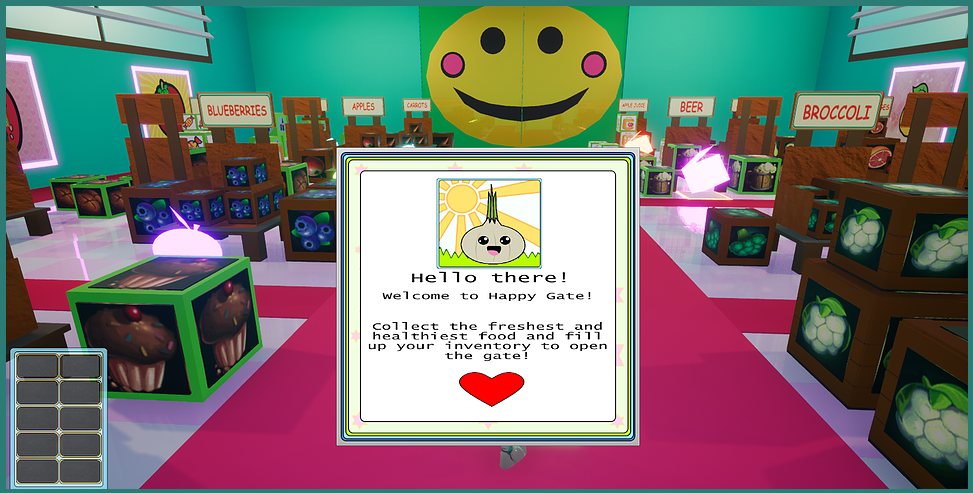
PROJECT OVERVIEW
PLATFORM : PC
ENGINE : UNREAL ENGINE 4
PROGRAMMING LANGUAGE : Blueprints Visual Scripting
PRODUCTION TIME : 3 WEEKS
TEAM SIZE : Me
PROJECT DESCRIPTION : HAPPY GATE is a 3D, Single Player, Third Person Educational Puzzle Game for PC.
MY ROLE / DUTIES :
- Project & Production Planning and Management
- Production and Design Documentation
- QA & Testing
- Game Design
- UX & UI Design
- Game Systems Design
- VFX & SFX Design
- Narrative Design
- Levels Design & Assembly
- Programming
- Environment Artist
PROJECT SPECIFICATIONS
GAME FEATURES :
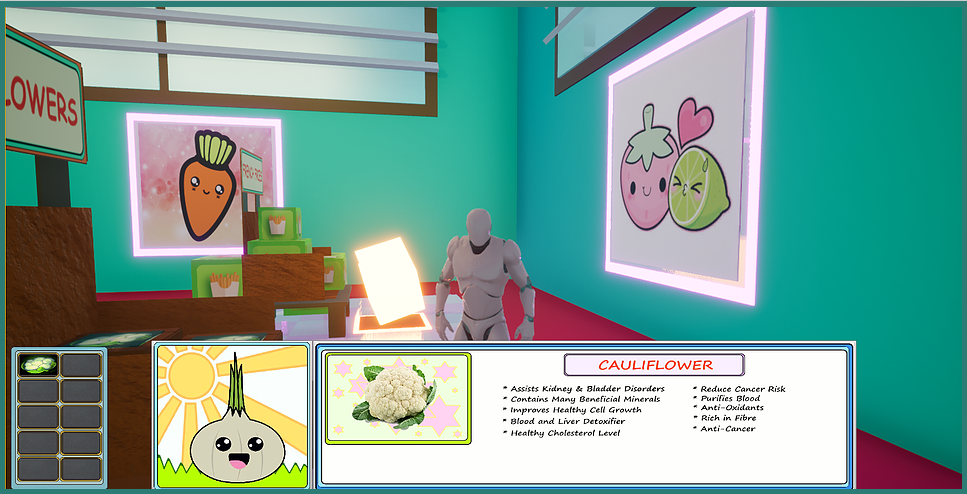
- Nutritional and Health information based on current scientific, evidence based nutritional information.
ABOUT THE GAME :
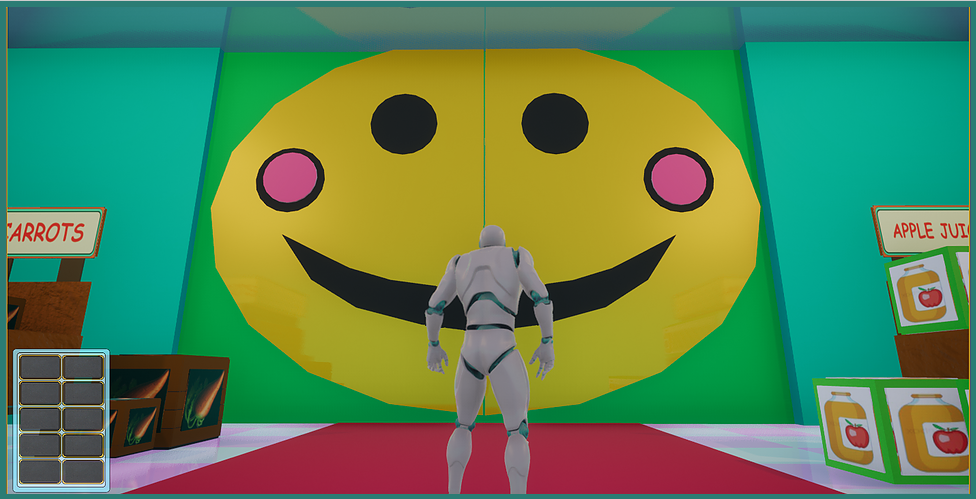
In HAPPY GATE the player attempts to gain access to a gate by filling the inventory with healthy food options.
Throughout this process the player will be exposed to informative content regarding a wide variety of different foods.
CORE GAME DESIGN PILLARS :
- PILLAR 1 : The player cannot end the game without having been exposed to all content that promotes the client’s intent.
- PILLAR 2 : The game experience and the educational content has to be accessible to a wide audience and to a demographic range as wide as possible.
- PILLAR 3 : The game has to be biased toward the promotion of the client’s intent.
ORIGINAL GAME CONCEPT
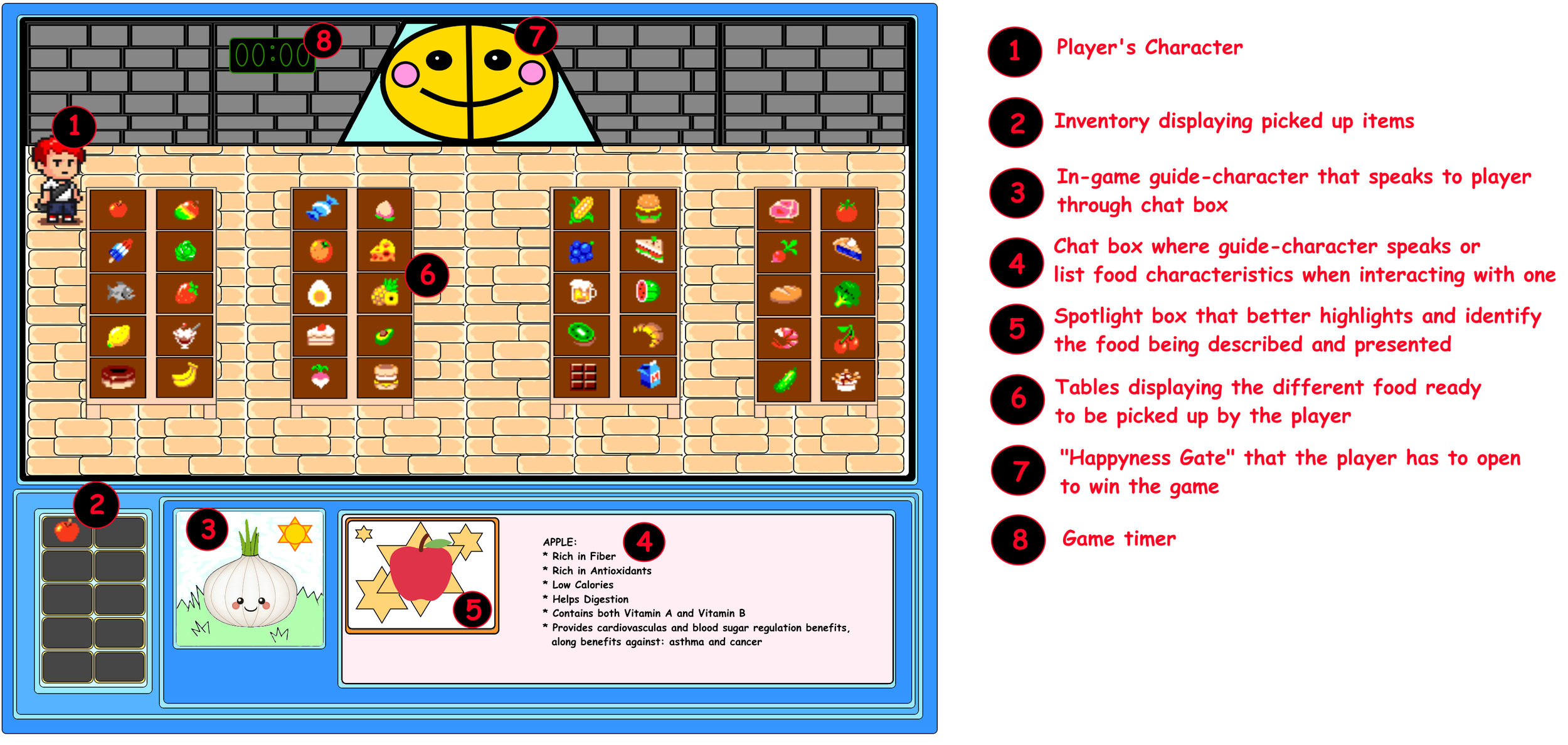
ABOUT THE PRODUCTION :
HAPPY GATE is the product of a school project aimed to create a game driven by educational and promotional purposes.
I participated in a simulated interview with a fictional client who employed me to develop and tailor a game designed to reach and educate a wide audience, which also promotes the fresh produce market.
HAPPY GATE design was driven and inspired to deliver its content and message through means and principles of positive reinforcement and positive feeback.
The game rejects the negative reinforcement principle, relying solely on positive reinforcement under the right circumstances.
The game doesn’t put any kind of pressure on the player throughout the entire experience, neither will the player ever encounter any danger or compromising circumstances.
The key message conveyed to the player is to open the gate by collecting all of the “right” foods.
The right food is all the fresh produce.
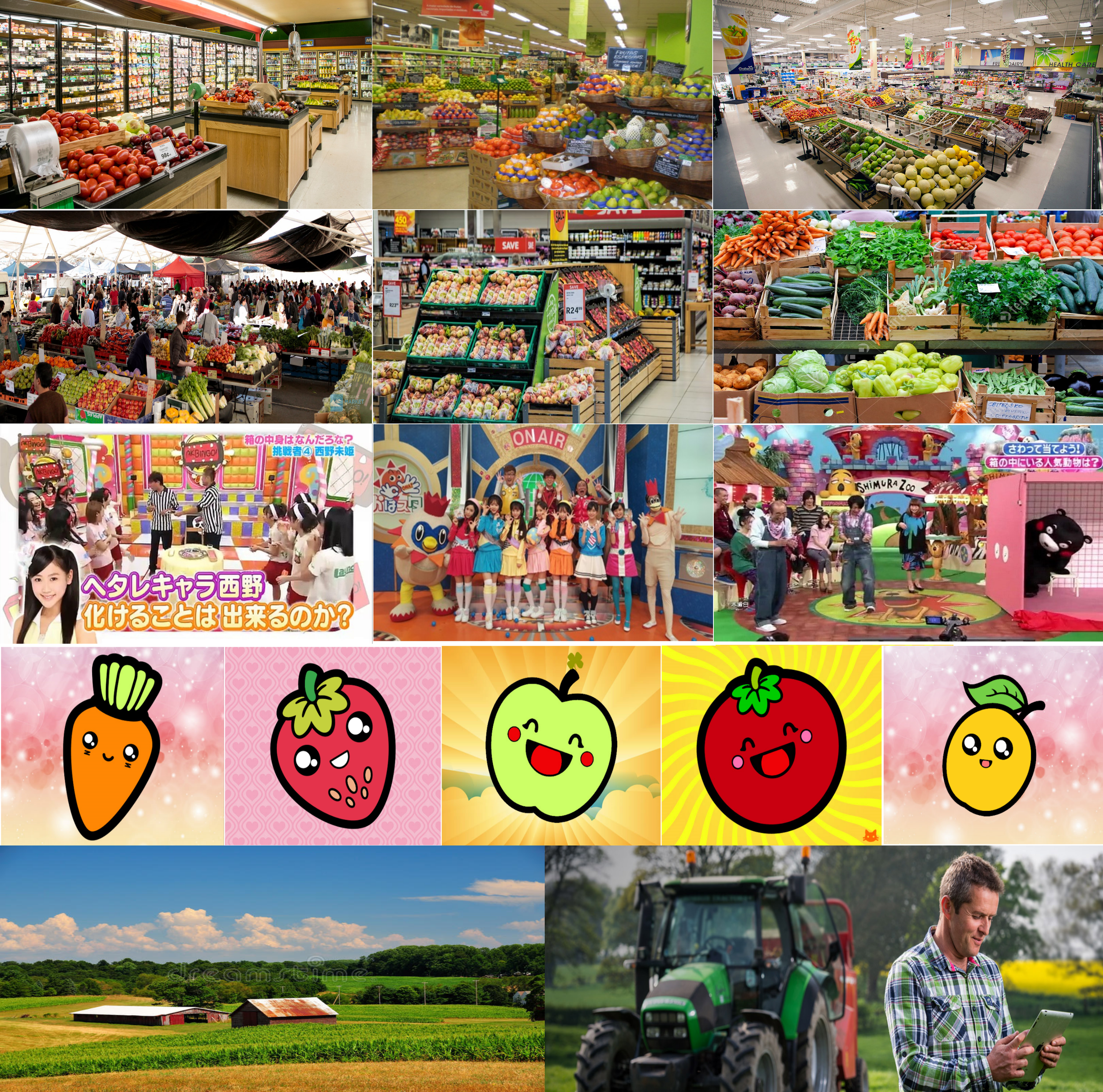
Many visual and non-visual elements have been orchestrated and set in place in the attempt to reinforce the identity of the fresh produce and to suggest to the player what to do.
In HAPPY GATE the fresh produce is contrasted with processed food.
When a processed food item is interacted with it will disappear without adding to the inventory of the player and a list of information is displayed showcasing the negative effects that the consumption of such food could cause.
When fresh produce is interacted with it will disappear adding one item to the inventory that will place the player closer to achieving the game’s goal. A list of information is then displayed showcasing the health benefits that consumption of such produce can bring for the consumer.
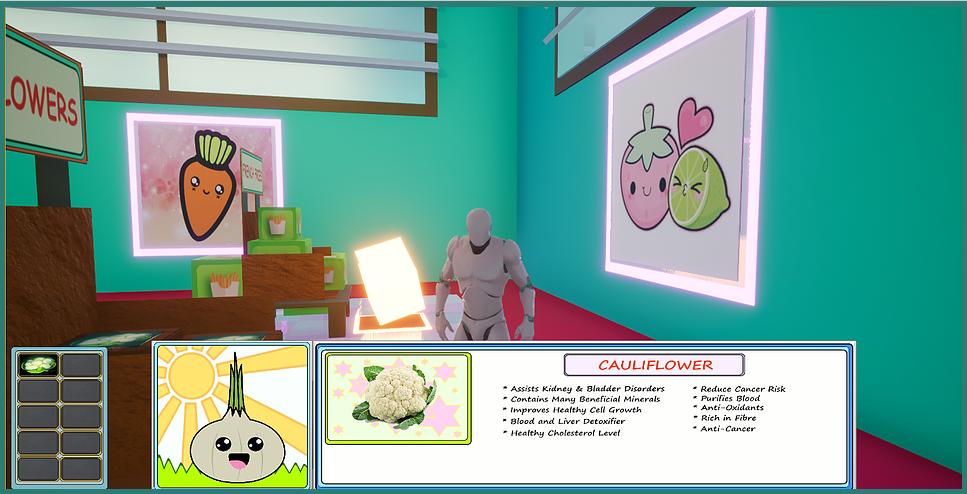
ABOUT THE ART DIRECTION :
The visual presentation of HAPPY GATE is designed to create a positive, happy and exciting atmosphere.
The atmosphere of positive reinforcement is the predominant focus of the game.
Any negative elements of the experience and the methods used to deliver such elements are deliberately designed to reinforce the player’s awareness between the positive and negative aspects of gameplay.
The positiveness is achieved by the use of a varied spectrum of bright and vivid colours, alongside friendly images and representations.
The environment is designed to re-create the atmosphere of a shopping centre mall / supermarket, although its organisation is set up to suit the needs of the game design.
The direction of the positiveness points toward the promotion of visuals and contexts suggestive of fresh produce, healthy food, and a healthy diet.
The aesthetics of the supermarket are blended with hints suggestive of a TV puzzle-quiz show.
All sound effects, music, images and textures used within the game, concept art and moodboards have been borrowed from the internet.
Soundtrack borrowed from “Puzzle Bubble 2 Arcade”, developed by Taito in collaboration with Hamster Corporation and Acclaim Studios London.